See the event.
Use visual context to understand activity in the spaces that matter.
INTELLIGENCE FOR THE PHYSICAL WORLD
Turn your cameras and sensors into real-time decisions.
AI that sees, senses, and acts where your operations happen.
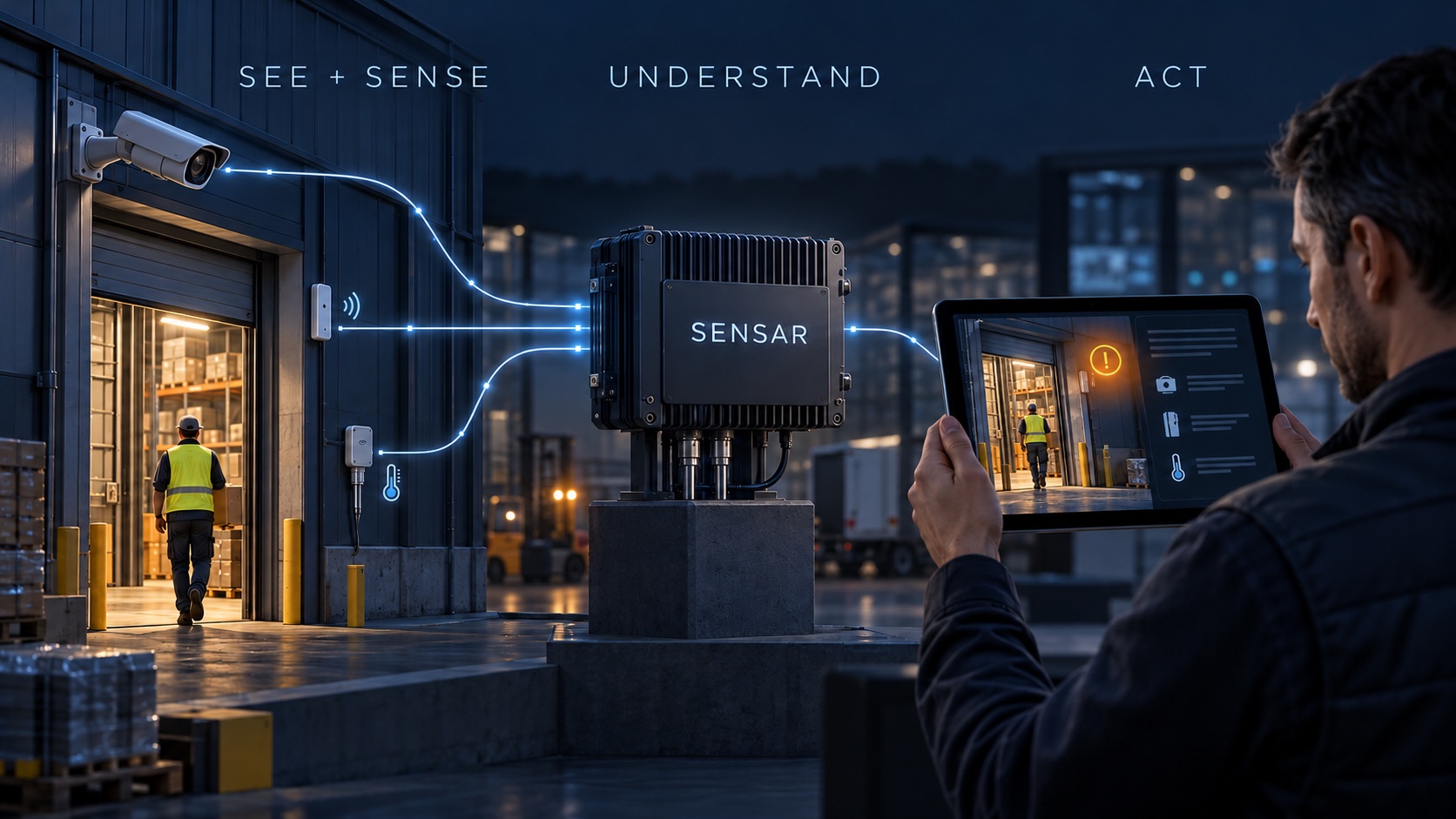
Concept illustration of Sensar’s approach. Devices and interface are illustrative.
01 / MEET SENSAR
The physical world never stops moving. Your intelligence shouldn’t stand still.
Sensar is building AI for the places where work happens: facilities, production floors, loading docks, and the spaces in between.
Cameras show what is happening. Sensors add context. Sensar’s vision is to bring these signals together, helping teams move from isolated observations to informed decisions.
Our focus is practical: understand the event, connect it to the operation, and give people a clearer next step.
Use visual context to understand activity in the spaces that matter.
Bring video together with inputs such as temperature, current, or door state.
Make the location, context, and significance of an event easier to understand.
02 / REAL-WORLD APPLICATIONS
Explore six ways cameras, AI, and sensor data could give teams a clearer view of their operations.
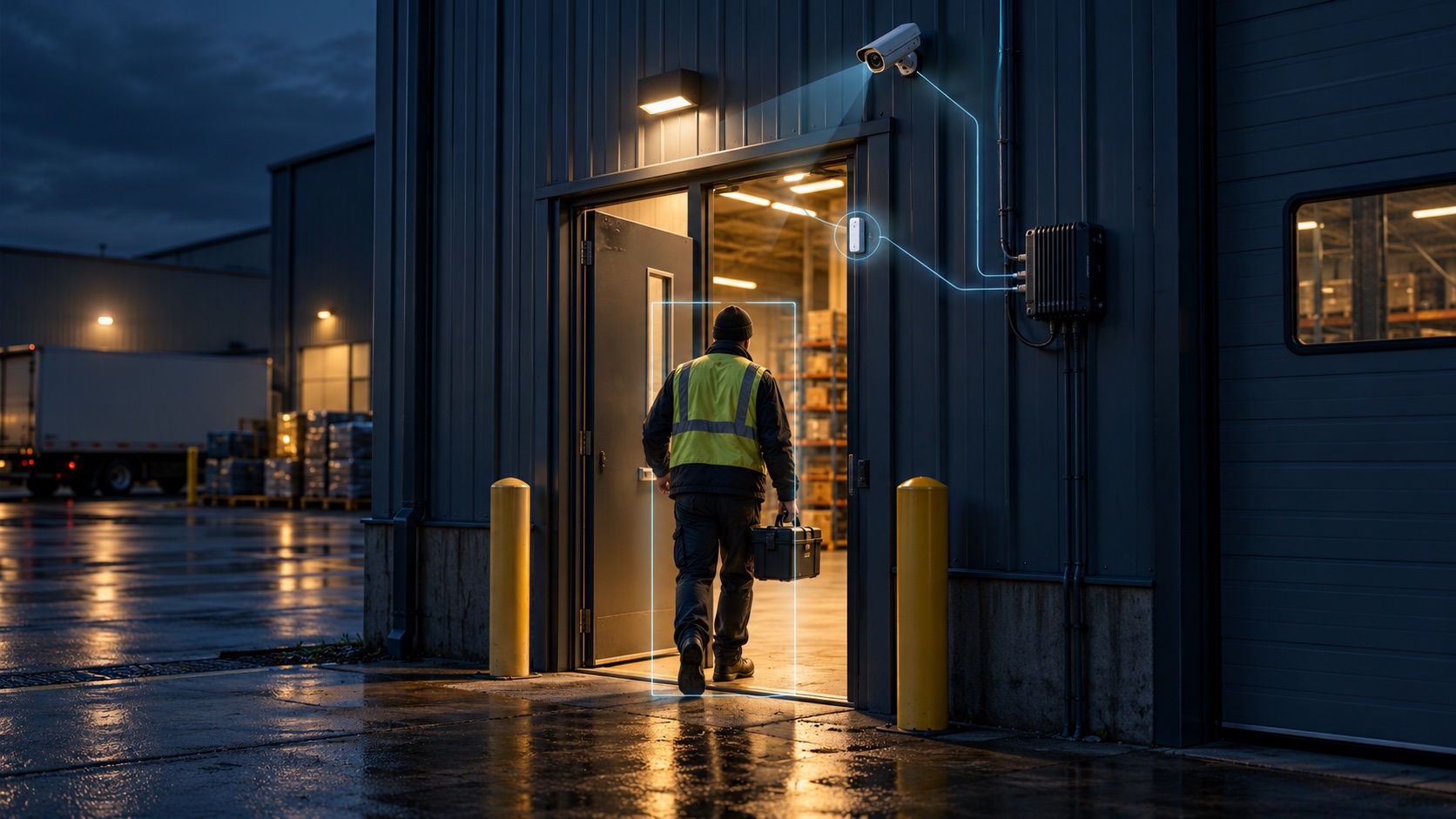 DOCK B / AFTER HOURS
After hours, a camera observes activity at a loading dock. AI analyzes the video on site for a person in a defined zone, while a door sensor supplies the opening event. Together, these signals could give the security team a focused incident to review.
Conceptual examples, not live feeds. Camera placement, AI models, sensor compatibility, and event criteria require site-specific validation. Vehicle examples support review; they do not replace certified safety systems. Imagery is AI-generated.
03 / THE APPROACH
Start with the cameras, sensor inputs, and operational areas relevant to your use case. Establish what is available and compatible.
Define the events that matter. Analyze camera views with AI at the site, then correlate those observations with sensor readings to build a more useful picture.
Shape the information around your team’s workflow: what happened, where it happened, and what deserves a closer look.
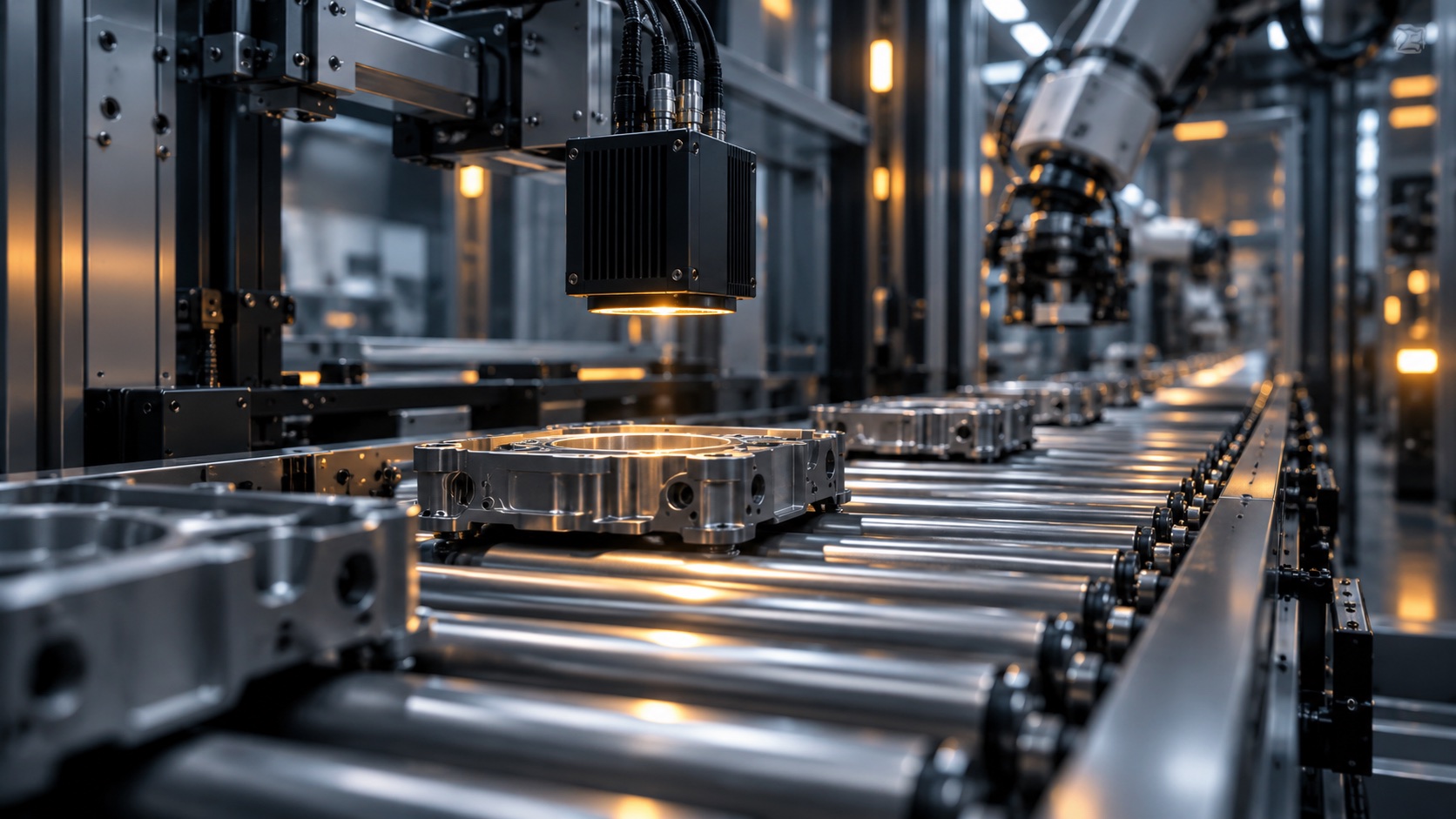
PURPOSE-BUILT FOR PHYSICAL OPERATIONS
Every site has its own equipment, rhythms, and constraints. We believe useful AI starts by understanding that reality.
Sensar’s approach puts operational context first, with a focus on operational intelligence, meaningful signals, and people who need to make decisions.
Start with your environment04 / A LITTLE MORE CONTEXT
Sensar is an AI startup focused on cameras, sensors, and intelligence for physical operations. We are developing ways to bring visual and sensor context together across security, manufacturing, and logistics.
Examples include after-hours activity, production-line interruptions, cold-chain conditions, shared vehicle zones, visual quality checks, and space utilization. Each combines camera views, local AI analysis, and relevant sensor readings. These are illustrative scenarios; each use case needs to be scoped and validated for the site.
Existing cameras and sensors are a starting point for assessing a deployment. Compatibility depends on device models, accessible streams and interfaces, network conditions, and the requirements of the use case. A site assessment should establish what can be reused.
Sensar brings visual observations and sensor readings together to give teams a more useful picture of an event. Sensar’s direction includes intelligence at the site, with the hardware, connectivity, and data-handling approach determined by the deployment.
No. The scenarios and generated imagery explain the concept. They are not live camera feeds, customer installations, or evidence of measured performance.
Choose one operational problem. Note the area involved, the cameras and sensors available, who needs to respond, and how you would judge success. Use “Talk to Sensar” below to open an email draft with these prompts, or email [email protected] directly.
START WITH ONE MEANINGFUL USE CASE
Think of one thing you wish your operation could tell you.
That’s a good place to begin.